Water reservoir
72%
Enough for 19 days at this week's use.
Now raising for Community One
A small private computer at the heart of a community. Its own power. No internet. Software that helps people distribute resources fairly.
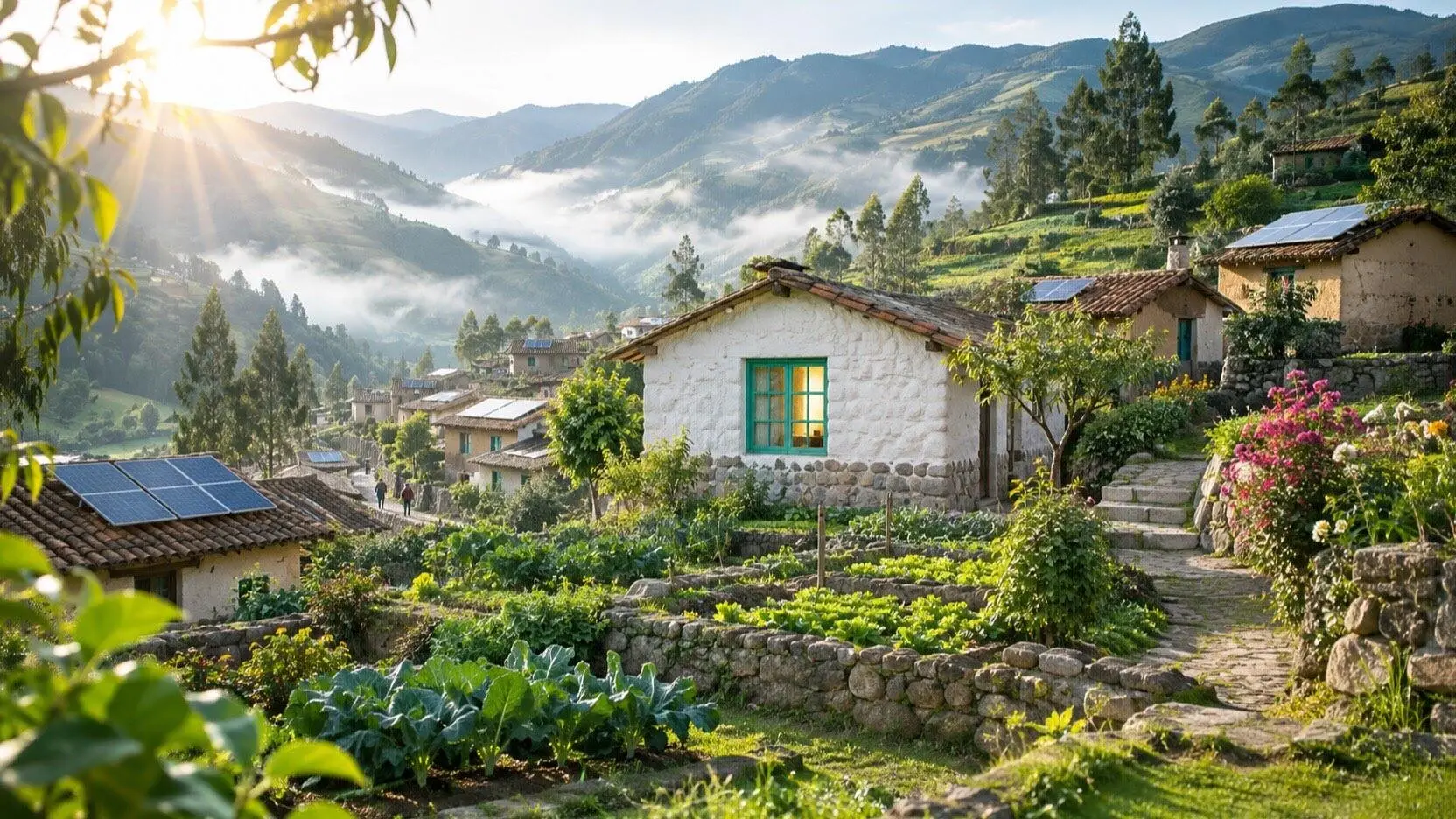
IFar away
IIIInside the node
Solar panels and batteries sized for the place. Heavy work runs in full sun. In long cloudy spells it slows down instead of switching off.
A compact server with GPUs running open AI models on site. Standard parts, so local technicians can swap anything that wears out.
Core tools every community gets for sharing water, energy, food and tools. Then what this community asks for, in its own language.
A charter the community writes before anything is installed. It owns the hardware and sets the rules. The AI suggests and explains. People decide.
IVWhere we begin
A node helps a community run what it has, better. It cannot replace a well, a sewer or a power line. So Community One will already have:
Wells, tanks or a piped network we can measure and help share.
Sewage or sanitation already in place and maintained.
Grid or a stable local supply. The node brings its own solar on top.
A council, cooperative or association people trust.
They ask for this, and agree how it runs before anything is installed.
Roughly a few hundred to a couple of thousand people.
Communities still without safe water, sanitation or electricity need those first, and building them is not what we do. Putting a computer in before a well would help no one.
We plan to work alongside organisations that build water and energy systems, and to bring nodes to those communities once the basics are in place. That is a later chapter, and we would rather say so now.
Build infrastructure? Partner with usVA day with the node
Enough for 19 days at this week's use.
The sun is up. Batteries at 64%.
VIHow it happens
We shortlist communities that meet the basics, through local partners and cooperatives. They choose us as much as we choose them.
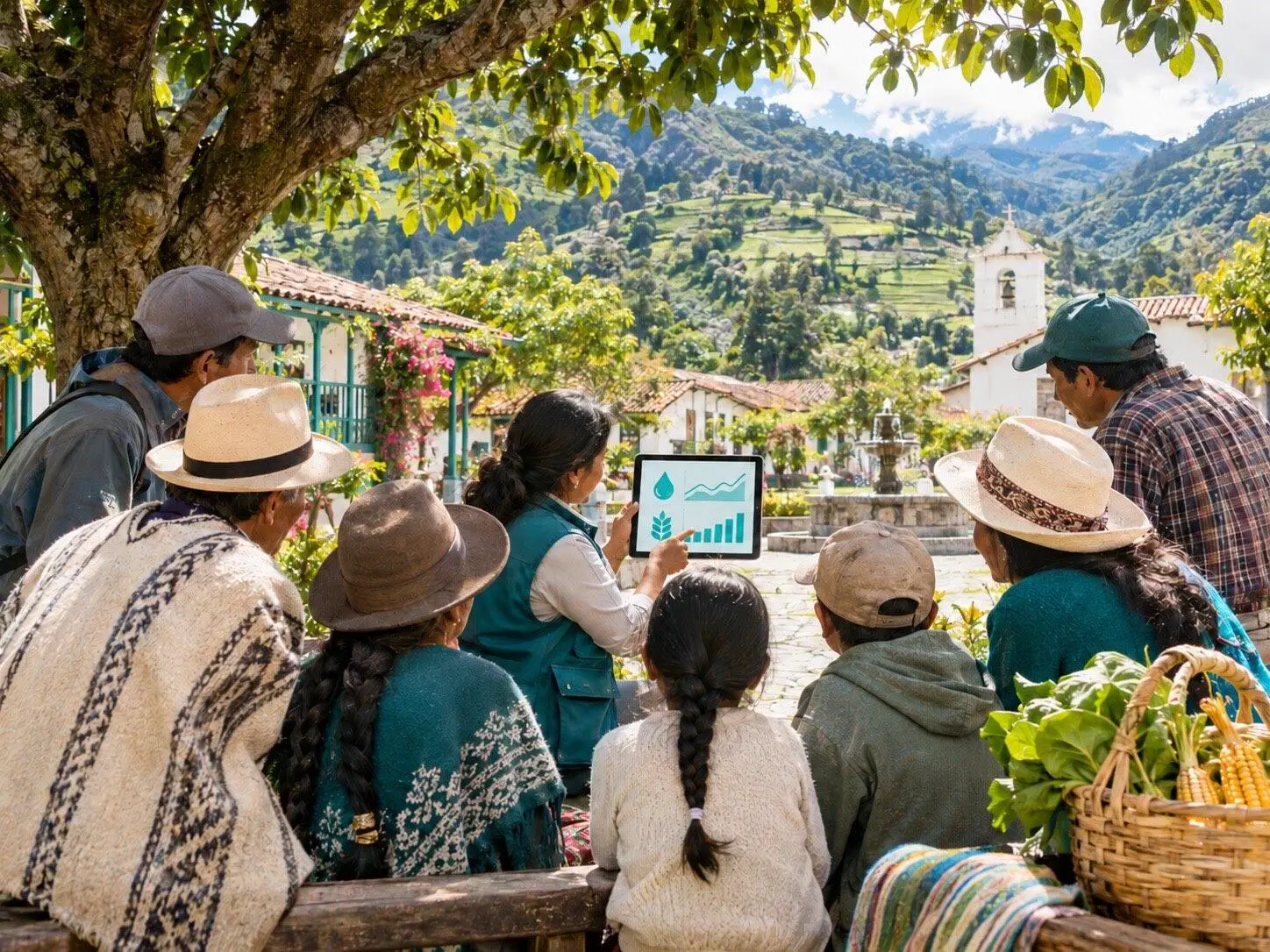
Months of meetings before any hardware. What do people need help with? What must stay private? The community writes its charter.
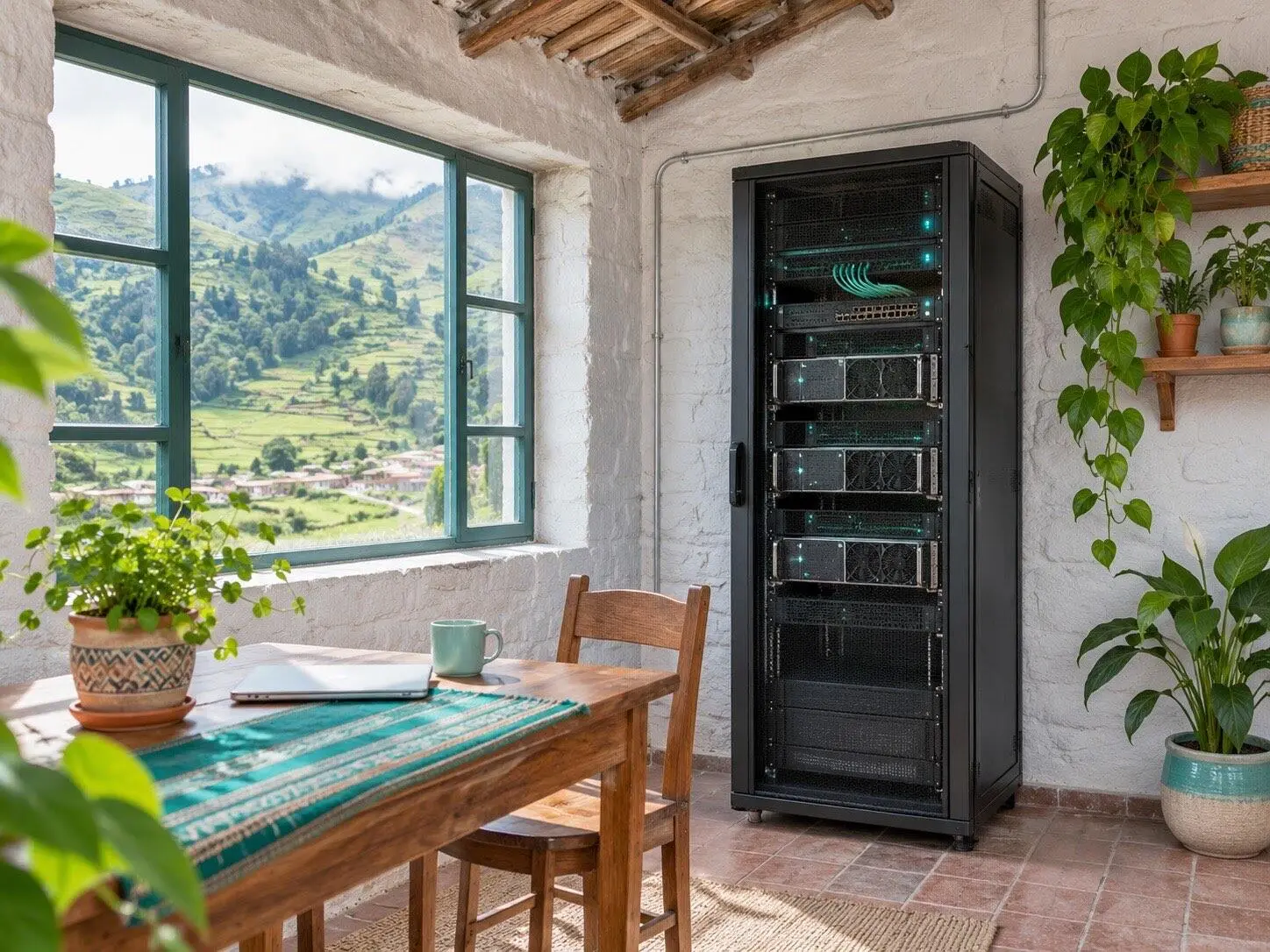
We install the node and its power, train and pay local technicians, and build the software the community asked for.
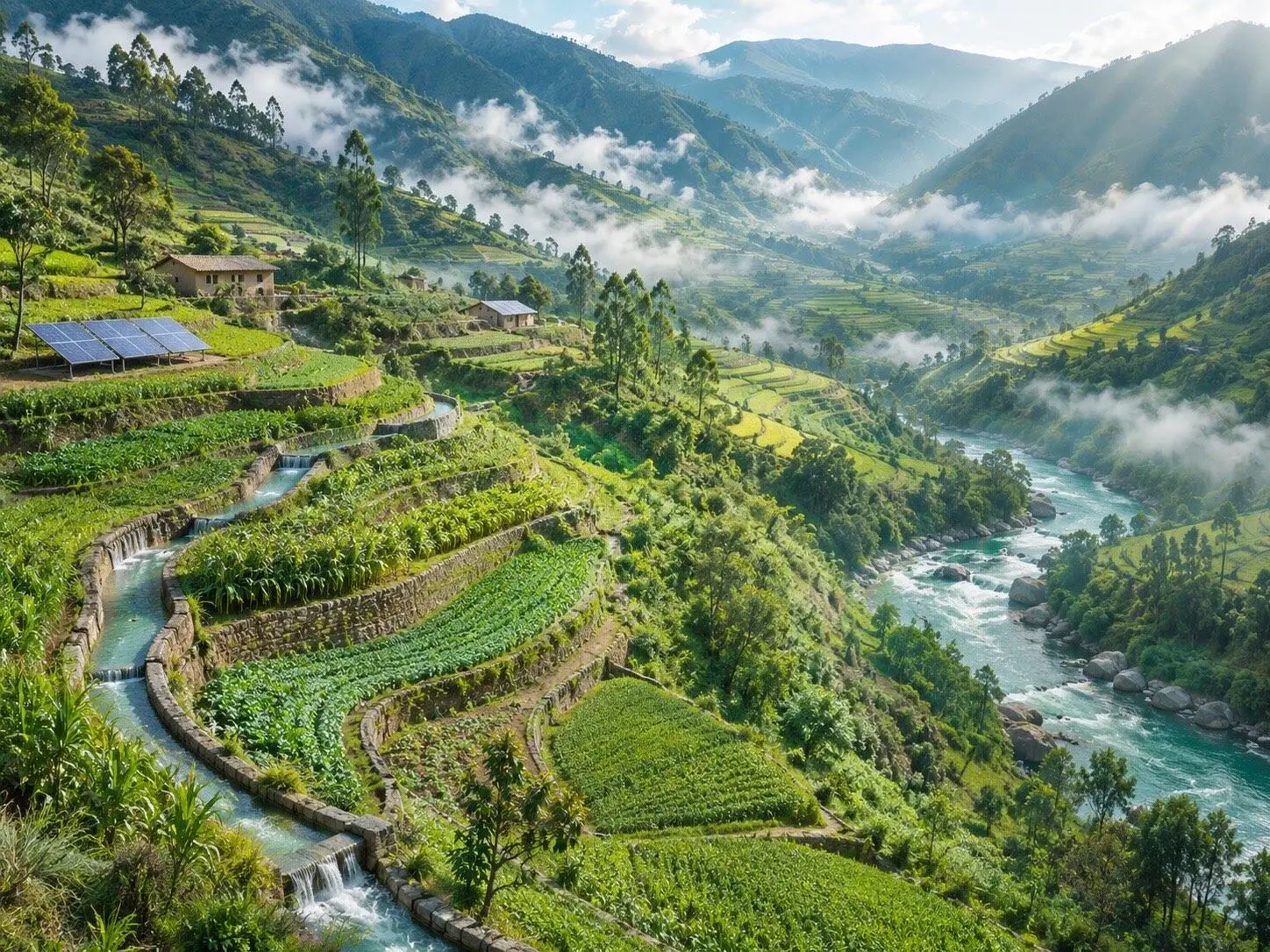
Water saved, uptime, fairness, how many households use it. Measures agreed at the start, published openly, good or bad.
VIIThe hard questions
Yes, for what a community needs.
Open models on a few GPUs handle the local language, forecasts for water and energy, scheduling and plain-language answers. None of that needs the giant models behind cloud chatbots.
We set the power budget first, then pick models to fit.
Heavy jobs run in full sun, batteries carry the evenings, and in long cloudy spells the node slows down rather than switching off.
Local people we train and pay.
They get a spare-parts kit and standard, swappable components. Software updates arrive in person, signed and checked, and only go in with the community's approval.
It only advises.
Every suggestion shows its numbers and reasons. Nothing that touches shared resources happens automatically. People make the decisions, and their corrections make it better.
The community, through a charter written before installation.
It sets what the node can see, who can ask what and how rules change. A record of what it suggested and why is open to every resident. We cannot change the rules or read the data.
A mix we will test in Community One.
A modest service fee paid from measurable savings in water and energy, contracts with towns and regional governments, and foundation funding for communities that cannot pay yet.
Not yet. For the first deployments a community needs working basics: safe water supply, sanitation, and electricity that is either on the grid or a stable local system we can add to. It also needs a recognised way of making decisions together, such as a council, cooperative or association, and it needs to invite us. These are the conditions where the node can help straight away instead of waiting on infrastructure we cannot provide.
They need infrastructure first, and that is not what we build. We would be doing them a disservice by putting a computer in before a well. We plan to work alongside organisations that build water and energy systems, and to bring nodes to those communities once the basics are in place. We say this plainly so nobody mistakes us for a fix for missing infrastructure.
Small enough to know well and large enough for shared resources to matter: roughly a few hundred to a couple of thousand people. Big enough to measure real results, small enough that every household can take part.
It is a strong candidate, with many organised rural communities and cooperatives, but it is not fixed. We will go wherever a community meets the criteria, invites us, and has local partners who can support the work over years.
That risk is real, which is why the process starts with an invitation and months of listening before anything is installed. The community owns the hardware, sets the rules, chooses what the software does and can switch it off. If they decide it is not for them, they keep the equipment.
Yes, for the jobs a community needs. Today's open models run well on a few GPUs: answering questions in the local language, summarising meetings, forecasting water and energy, planning harvests and schedules. These tasks do not need the giant models that power chatbots in the cloud.
Cloud AI needs reliable internet, sends a community's private life to companies abroad, and can be priced up or switched off by someone else. A local node keeps working when the connection or the grid fails, keeps data where it belongs, and costs the same next year as this year.
The node runs its own local Wi-Fi network inside the community, like a private intranet. Residents use their own phones, a few shared tablets or a kiosk at the community centre, by text or by voice. No internet connection is involved.
Updates are delivered in person on physical media, checked against our digital signature before anything is installed, and only applied with the community's approval. The node never opens a connection out.
From what the community already knows and chooses to share: water meter and tank readings, the solar system's own data, simple sensors where they help, harvest and stock records, and what people enter themselves. We start with a few useful numbers and add more only if people want it.
It will, sometimes. That is why it only advises. Every suggestion shows the numbers and reasons behind it, important decisions stay with people, and nothing that affects shared resources happens automatically. Corrections from residents make it better.
We size the system the other way round: power budget first, then models that fit it. Heavy jobs like forecasts run when the sun is strongest, the batteries cover evenings, and the node drops to a low-power mode in long cloudy spells instead of switching off.
Local people. We train and pay technicians from the community, leave a kit of spare parts, and design the node from standard, swappable components. For anything bigger, our team visits on a regular schedule.
We plan for years of service with parts replaced as they wear, and design so one failed component never takes the whole system down. The pilot will tell us real numbers and we will publish them.
It sits in a locked room in a building the community chooses, its storage is encrypted, and it is useless and unreadable once removed. The community decides who holds the keys.
The community, through a written charter agreed before installation. It sets what the node can see, who can ask what, and how rules change. We can advise, but we cannot change the rules or read the data.
The charter is designed against that: open records of what the node suggested and why, rules any resident can read, and changes only through the community's agreed process. Fairness is measured and reported openly as part of the pilot.
No. The data stays on the node in the community. We do not take copies, train other products on it, or sell it. What we publish from the pilot is aggregate results the community has approved.
We work with local authorities from the start and follow the country's data and telecoms rules. Keeping data inside the community makes privacy compliance simpler, not harder.
The first node is funded by this round, with grants where they fit. Long term, we expect a mix: communities and cooperatives paying a modest service fee out of measurable savings in water and energy, municipalities and regional governments contracting for towns, and foundations funding communities that cannot pay yet. Community One is where we test which mix works.
By owning part of the company that builds and supports the nodes. Once the kit and software are proven, each new deployment, service contract and town or city programme is revenue. This is an early, high-risk stage and we will talk honestly with every investor about that.
Before installation we agree measures with the community, such as water saved, energy wasted, node uptime, how many households use it, and whether people feel decisions are fairer. We publish the results openly, good or bad.
Yes. Choose foundation or grant maker in the investor conversation and we will talk about the structure that suits you.
Yes. Once Community One is running, and with the community's agreement, investors and partners are welcome on site.
Something missing? Ask us at hello@privatecommunityai.com.
VIIIVillage to world
It starts with one community.
Then a town. Nodes sharing only what people choose to share.
Then cities, neighbourhood by neighbourhood.
Then everyone. Fair, local AI, within reach of every community on earth.
EpilogueYour part in it
For investors and foundationsFund Community OneThe node, the power, the software and the team on the ground.Start the conversation
Systems, resources, ecosystems, powerBuild it with usFounding roles for people who know how real systems work.See the roles
The future of AI can be local, fair and ours.